





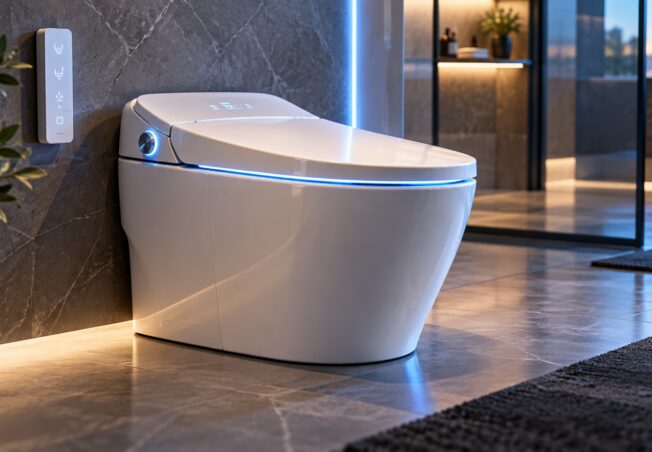
You know that moment. You decide to upgrade your bathroom with a modern smart toilet. Heated seat, automatic flushing, bidet washing, warm-air drying, and a sleek design. Everything looks perfect until you realize that installing it involves more than removing the old toilet and connecting a new one.
Smart toilets combine traditional plumbing with electronic components, sensors, and additional features that require careful installation.
Before installing an EPLO smart toilet or another integrated model, you need to check the water supply, shut-off valve, electrical requirements, toilet flange, and available space.
The biggest mistake is assuming that every smart toilet installs exactly like a standard toilet. Depending on the model, you may need additional plumbing connections, a different angle stop, or electrical work before installation can begin.
Here’s what homeowners should know before upgrading their bathrooms.
What Is a Smart Toilet?
A smart toilet combines conventional toilet functions with electronic features designed to improve comfort, hygiene, and convenience.
Depending on the model, features may include:
- Heated toilet seats
- Built-in bidet washing
- Adjustable water temperature and pressure
- Warm-air drying
- Automatic flushing
- Touchless sensors
- Remote controls
- Night lighting
- Automatic deodorizing
- Heated or adjustable washing functions
- Integrated electronic controls
Some models use a traditional toilet with a separate electronic bidet seat. Others, including integrated EPLO smart toilets, combine most of these functions into a single unit.
The installation requirements vary between models. That’s why checking the manufacturer’s instructions before removing the existing toilet is essential.
Why Smart Toilet Installation Can Get Complicated
A standard toilet generally requires a compatible toilet flange, a water supply connection, and a properly installed seal.
A smart toilet may require additional preparation because it combines plumbing and electrical components.
Before installation, check the following:
- Toilet rough-in dimensions
- Existing toilet flange condition
- Water supply location
- Required water pressure
- Number and type of required water connections
- Existing angle stop or shut-off valve
- Electrical outlet location
- Manufacturer’s electrical requirements
- Clearance around the toilet
- Mounting hardware and floor conditions
The rough-in measurement is particularly important. If the new toilet isn’t compatible with the existing flange location, installation may require additional work.
Measure the bathroom and verify the model specifications before ordering the toilet. This simple step can prevent unnecessary delays and additional expenses.
Does a Smart Toilet Need Two Water Connections?
Not every smart toilet requires two water connections. The plumbing configuration depends on the manufacturer’s design and the specific model.
Some smart toilets use a single water supply connection. Others may require a different configuration for their flushing and washing systems.
Before installation, check the manufacturer’s plumbing diagram to determine the number of connections required.
If your existing toilet has one standard water supply but the new model requires a different arrangement, the plumbing may need to be modified.
This is particularly important when installing an integrated smart toilet because the water connections may be positioned differently from those on a conventional toilet.
Does the Angle Stop Need to Be Replaced?
The angle stop is the shut-off valve that controls the water supply to your toilet.
A conventional toilet commonly uses a single-outlet angle stop. Depending on the smart toilet model, the existing valve may not be compatible with the required water connections.
If the manufacturer specifies a dual-outlet configuration, the existing angle stop may need to be replaced with a compatible dual-outlet shut-off valve.
A replacement may also be appropriate if the existing valve is leaking, corroded, damaged, or difficult to operate.
Before purchasing a replacement valve, verify the connection sizes, outlet configuration, and manufacturer’s requirements.
It is much easier to identify these requirements before the old toilet has been removed than to discover a plumbing incompatibility halfway through the installation.
Does an EPLO Smart Toilet Need an Electrical Outlet?
Most fully integrated smart toilets require electricity to operate features such as heated seating, bidet washing, sensors, electronic controls, lighting, and drying functions.
The exact electrical requirements depend on the model.
Before installation, verify:
- Required voltage
- Power consumption
- Plug or hardwired connection requirements
- Outlet location
- Grounding requirements
- Manufacturer’s electrical instructions
The electrical connection must be suitable for the bathroom environment and installed in accordance with applicable electrical codes and manufacturer requirements.
If the bathroom doesn’t have an appropriate outlet, additional electrical work may be necessary. Work requiring an electrical contractor should be performed by a properly licensed professional.
Don’t assume that an existing outlet is suitable simply because it is close to the toilet. Check the manufacturer’s requirements before connecting the unit.
Common Smart Toilet Installation Mistakes
Even an expensive smart toilet can develop problems if the installation isn’t properly planned.
Here are some common issues to avoid.
1. Ignoring the Rough-In Measurement
The rough-in determines where the toilet connects to the drain relative to the finished wall.
Measure the existing installation and compare it with the manufacturer’s specifications. Also check the toilet’s overall depth, width, height, and clearance requirements.
2. Assuming the Existing Angle Stop Will Work
The existing shut-off valve may not match the new toilet’s plumbing configuration.
If the model requires a dual-outlet connection, the valve may need to be replaced or the water supply modified according to the manufacturer’s instructions.
3. Forgetting About Electrical Requirements
Some homeowners purchase a smart toilet without checking whether the bathroom has a suitable electrical connection.
Determine the power requirements and outlet location before installation begins.
4. Reusing a Damaged Toilet Flange
The flange secures the toilet to the drain and helps maintain a proper connection.
A cracked, damaged, or improperly positioned flange should be addressed before installing the new toilet.
5. Skipping the Leak Test
After installation, the water connections should be checked carefully for leaks. The toilet should also be tested according to the manufacturer’s instructions to verify that the flushing and electronic functions operate correctly.
6. Ignoring the Manufacturer’s Instructions
Smart toilets vary in their plumbing, mounting, and electrical requirements.
Instructions for one model may not apply to another. Always follow the installation documentation supplied with the specific unit.
What Homeowners Should Know About EPLO Smart Toilets
EPLO smart toilets are an option for homeowners looking to upgrade to a more modern bathroom experience.
Depending on the model, an integrated smart toilet may combine traditional flushing with electronic washing, heated seating, sensors, and other convenience features.
However, the exact installation requirements depend on the specific model.
Before installing an EPLO toilet, confirm:
- Compatible rough-in dimensions
- Required water supply configuration
- Whether the existing angle stop is suitable
- Electrical specifications
- Mounting and sealing requirements
- Required clearances
- Included accessories and installation hardware
If the installation requires an additional water connection or a replacement angle stop, identify that work before the installation appointment.
Proper preparation helps avoid delays and reduces the risk of problems after installation.
When Should You Hire a Professional Smart Toilet Installer?
Replacing a standard toilet with another conventional model can be relatively straightforward when the existing plumbing is in good condition.
A smart toilet installation can involve more variables.
Professional installation may be particularly helpful when:
- Installing an EPLO or another integrated smart toilet
- The existing angle stop needs replacement
- Additional water connections are required
- The toilet flange needs repair
- The existing rough-in doesn’t match the new toilet
- Electrical power needs to be added or relocated
- The toilet is heavy or difficult to position
- The bathroom has delicate tile or finished flooring
Smart toilets can be expensive appliances. Correct installation helps protect the unit, the bathroom flooring, and the surrounding plumbing.
It also allows potential compatibility problems to be identified before they become more expensive repairs.
How to Prepare for Smart Toilet Installation
A little preparation can make the installation process much smoother.
Before your appointment:
- Keep the installation manual. The manufacturer’s instructions are the best source for model-specific requirements.
- Confirm the exact model number. Different models may use different plumbing and electrical configurations.
- Check the rough-in measurement. Make sure the toilet is compatible with the existing drain location.
- Inspect the water supply valve. Determine whether the existing angle stop is compatible with the new unit.
- Confirm the water connection requirements. Find out whether the model uses one water supply or requires another configuration.
- Check the electrical setup. Verify that the existing power connection meets the manufacturer’s requirements.
- Inspect the toilet before installation. Check for visible shipping damage and confirm that the required hardware is included.
These checks help identify missing components and compatibility issues before the old toilet is removed.
Smart Toilet Installation in Orange County
Planning a bathroom upgrade? Fixi Handyman Service helps homeowners with toilet replacement, bathroom fixture installation, and smart bathroom upgrades.
If you’re installing an EPLO smart toilet or another integrated model, proper preparation is essential. The plumbing configuration, angle stop, electrical requirements, and mounting dimensions should all be checked before installation.
Fixi Handyman Service serves homeowners in Newport Beach and surrounding Orange County communities.
Whether you’re replacing a conventional toilet or upgrading to a modern smart toilet, contact Fixi to discuss your installation requirements and request an estimate.
Looking for smart toilet installation in Orange County? Get in touch with Fixi Handyman Service to discuss your project.